
Introduction
An examination controller today manages online exams, AI proctoring, digital evaluation, and student support bots. Five years ago, none of these were on the job description. Education technology trends are moving faster than most institutions can plan for.
The challenge is no longer whether to adopt technology. It is knowing which trends deserve budget and attention in 2026, and which are hype. This guide covers the 10 education technology trends that matter most for schools, colleges, and universities this year, with a focus on how institutions learn and assess.
The global education technology market is projected to grow from about $213 billion in 2026 to over $437 billion by 2033, a 10.8% CAGR. AI in education is growing even faster – from $11.4 billion in 2026 toward $57 billion by 2033 at a 25.9% CAGR.
Grand View Research
Key Takeaways
- AI in education is growing at 25.9% CAGR – more than twice the pace of the overall EdTech market (Grand View Research)
- Generative AI assessments are shifting exams from rote memorization to skill-based evaluation with instant feedback
- AI agents are moving beyond chatbots into admissions, evaluation, and exam operations workflows
- Digital answer sheet evaluation now processes 100,000+ answer sheets per session at large universities
- Exam security is a board-level concern after high-profile question paper leaks – AI-generated papers and encrypted distribution are the response
- Most institutions still lack formal AI governance – institutions that appoint AI officers early gain an execution advantage
What Is Driving Education Technology in 2026?
Three forces are pushing institutions to modernize this year. First, AI has matured from pilot projects into production systems that grade, proctor, and answer student queries reliably. Second, students now expect digital-first experiences for admissions, exams, and results. Third, regulators and university boards are demanding stronger exam security and transparent, auditable processes.
Institutions that treat these forces as an integrated strategy – rather than isolated tools – are the ones seeing measurable gains in cost, speed, and integrity. The 10 trends below show where that strategy is heading.
10 Education Technology Trends for 2026
1. Generative AI Assessments Replace Rote Testing
Generative AI assessment means evaluating a student through a dynamic, adaptive conversation with an AI system instead of a fixed question paper. The AI poses a scenario, analyzes the student’s response, and asks follow-up questions that probe deeper – much like a skilled examiner would.
Traditional exams measured how well students could recall information. Generative AI shifts the focus to problem-solving ability, depth of understanding, and domain-specific skills – the things employers and accreditors actually care about.
Consistency is a major advantage. Human evaluators can unintentionally let fatigue or bias influence marks. AI applies the same rubric to every candidate, which levels the playing field and produces defensible, auditable scoring.

Viva and oral exams benefit most. Instead of scheduling an examiner for every candidate, the AI interacts with the student, records responses as audio, analyzes the context of each answer, and assigns a rating with personalized feedback. Advanced voice assessment technology extends this to communication skills – evaluating language proficiency, structure, and clarity across hundreds of candidates in parallel.
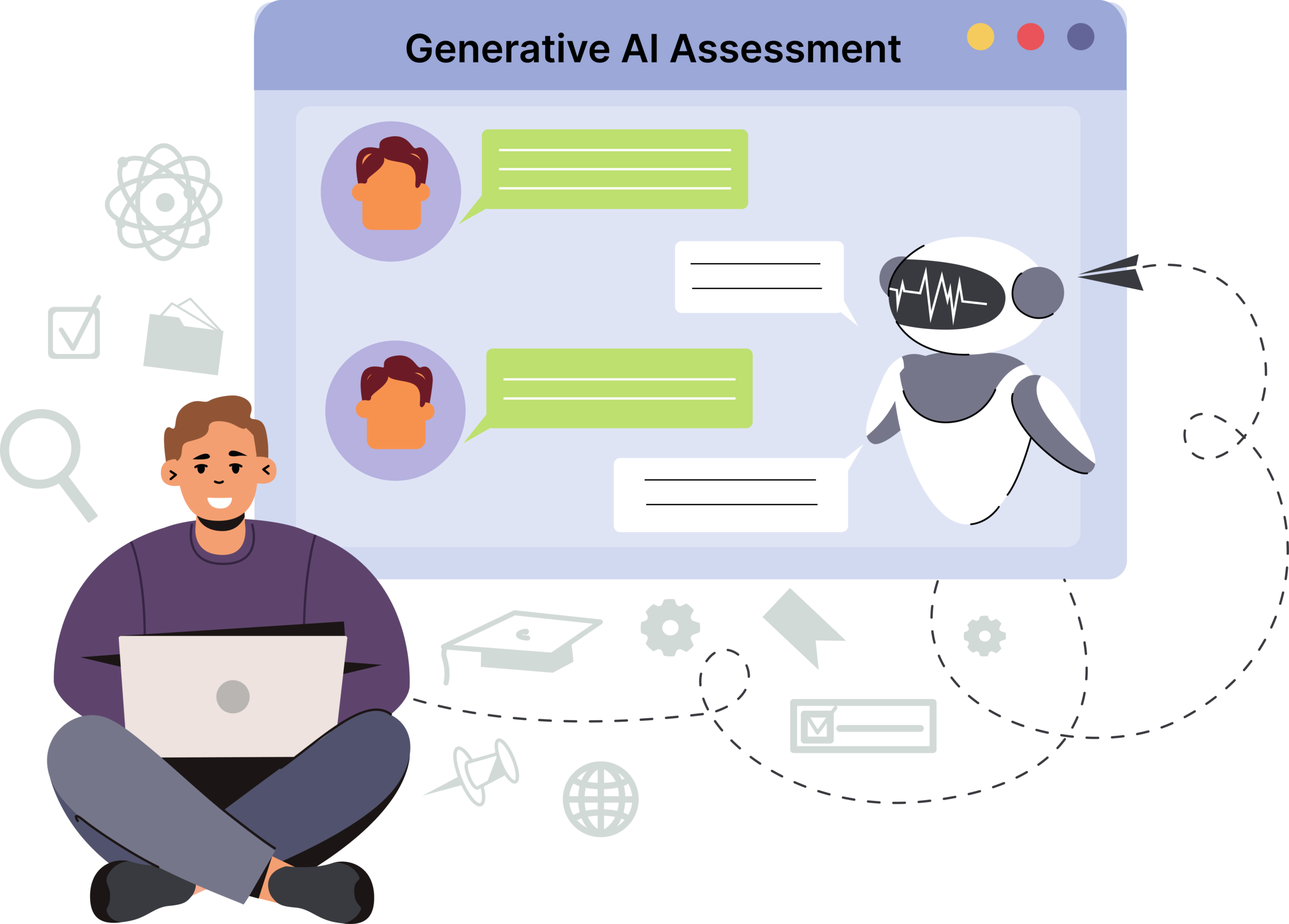
- Evaluate skills with real-world case studies.
- Instant feedback with skill ratings and areas of improvement.
- Dynamic assessment questions based on candidate responses.
2. AI Agents Move from Chatbots to Campus Operations
An AI agent is software that completes multi-step tasks on its own – checking data, making decisions, and taking action – rather than just answering questions. In 2026, universities are deploying agents for admission query handling, document verification, exam scheduling, and evaluation workflows.
Industry observers call 2026 the year of the agentic AI university, as institutions shift from experimenting with chatbots to running agents inside advising, enrollment, and assessment operations. Production data from campus deployments shows over 80% of AI workflow volume today handles student FAQs – which means the operational upside in evaluation and exam management is still largely untapped (Druid AI benchmark).
For a practical breakdown of where agents deliver value first, see our guide to AI agents every university needs.
3. AI Question Bank Management and Paper Generation
AI question paper generation means feeding a syllabus, PDF, or Word document into an AI system that produces a tailored question bank in minutes – mapped to topics, difficulty levels, and question formats. What used to take subject matter experts weeks now takes a single afternoon.
The workflow is straightforward. Upload the syllabus or reference content, set the difficulty distribution and question types (MCQ or descriptive), and generate multiple unique paper sets instantly. Role-based access controls who can define, review, and approve questions – creating an audit trail that manual processes never had.
Because every paper set is unique and generated on demand, AI-driven question paper generation also closes the biggest security hole in the exam lifecycle: a single paper sitting in a printing press or email inbox waiting to leak.

- Eliminate question paper leaks.
- Automate question paper creation process.
- Manage role-based access to define questions.
- Generate sets of question papers instantly.
4. Digital Answer Sheet Evaluation Goes Mainstream
Onscreen evaluation means scanning physical answer sheets and marking them digitally, with student identities masked and marks totaled automatically. It has moved from early-adopter status to standard practice at large universities, which now evaluate 100,000+ answer sheets per session on such systems.
The 2026 development is AI assistance inside the evaluation workflow. AI can read handwritten answers using OCR, compare them against model answers, and suggest marks that human moderators confirm. This hybrid model cuts evaluation cycles from months to weeks while keeping educators in control of final marks.
Institutions starting this journey should review onscreen marking best practices and our complete guide to digital evaluation of answer sheets.
5. Personalized AI Tutors and Exam Preparation

A personal AI tutor adapts to each student’s learning pattern – identifying weak topics from past attempts and focusing practice there. Students get 24/7 support without scheduling or per-hour tutor costs, and educators get analytics on where cohorts struggle.
The same principle now applies to competitive exam preparation. Platforms such as Eklavvya.ai generate mock tests aligned to specific exam syllabi, simulate real exam conditions, and break down performance by subject, topic, and subtopic. Practice modes explain every question, while analytics track accuracy and time management across attempts – turning self-study from guesswork into a measurable process.
6. Remote Proctored Exams Become the Default
Remote proctoring uses AI-powered monitoring – face detection, audio analysis, browser lockdown, and behavior flags – so candidates can take secure exams from any location. What began as a pandemic necessity is now a permanent capability that institutions use to expand reach and cut logistics costs.
In 2026, hybrid proctoring models dominate: AI flags suspicious events in real time, and human proctors review only the flagged moments. This lets one proctor supervise far more candidates without losing exam integrity. Eklavvya’s platform conducts remotely proctored exams across 15+ countries, from school assessments to university finals and certification programs.
- Importance of Remote Proctoring
- Role of AI in Remote Proctoring
- How AI helps to eliminate cheating?
- Why is it essential during online exams?
7. Exam Security and Question Paper Leak Prevention
High-profile question paper leaks have made exam security a board-level concern. When a single leak can invalidate an exam taken by hundreds of thousands of candidates, prevention is far cheaper than re-conducting.
The 2026 security stack combines encrypted question paper distribution, unique AI-generated paper sets per session, time-locked paper release, and complete audit trails of who accessed what and when. Institutions are also adopting secure question paper generation workflows that remove the printing press and courier stages entirely.
8. Hybrid Learning and Stackable Credentials
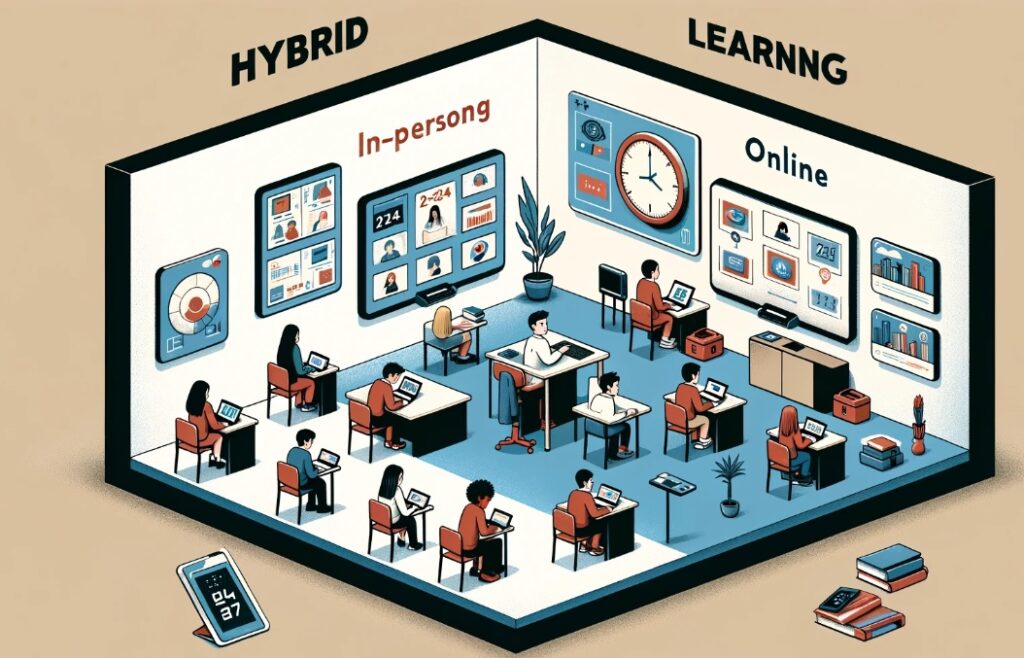
Hybrid learning blends in-person classes with online courses and certifications. Students increasingly combine a campus degree with short-term online credentials focused on employability – and institutions that support this stacking model attract and retain more students.
The operational requirement is real: hybrid degree programs need assessment infrastructure that works identically on campus and remotely – same question banks, same proctoring standards, same evaluation workflow. Institutions without that consistency struggle to keep credential quality defensible.
9. AI Governance and the Rise of Chief AI Officers
Most institutions now use AI somewhere, but few govern it. Surveys through 2026 consistently find that only around a quarter of faculty say their institution has a formal AI policy – a gap that creates real risk in assessment, where fairness and auditability are non-negotiable.
The response is a new institutional role: the AI officer. These leaders own AI policy, vendor evaluation, data protection, and staff training. Institutions that appoint them early move faster because every AI decision no longer requires a committee formed from scratch.
10. Student Support Chatbots Around the Clock

Students do not keep office hours. Campus AI deployment data shows 39% of student AI interactions happen outside standard working hours, and 14% on weekends (Druid AI). Chatbots absorb this demand – answering admission FAQs, exam schedule queries, and result questions instantly.
Beyond support, tutoring bots provide step-by-step guidance on course material, adapt to individual learning patterns, and flag struggling students to faculty. The practical benefit for administrators: routine queries stop consuming staff time, and no student question goes unanswered at 11 pm before an exam.
Advantages of Education Technology
Across all 10 trends, the benefits for institutions fall into four categories:
- Lower cost per student – online delivery and automated evaluation eliminate infrastructure, logistics, and manual processing expenses
- Speed – AI question generation, digital evaluation, and automated result processing compress exam cycles from months to weeks
- Reach and flexibility – remote proctored exams remove geography as a constraint for candidates and institutions alike
- New assessment formats – voice-based assessments, AI viva exams, and auto-evaluated programming tests measure skills that paper exams never could
Related Guides
Dive deeper into the technologies shaping education:
- Complete Guide to Online Examination Systems – End-to-end platform for digital assessments
- 9 Innovative Assessment Methods Beyond Traditional Exams – Modern approaches for 2026
- Online Proctored Exams on Mobile Phones – Mobile-first assessment solutions
- How to Conduct Online Aptitude Tests – Complete guide with anti-cheating measures
- Online Viva Exam: How to Conduct Oral Exams Digitally – AI-powered oral assessment
Stay Ahead with Eklavvya’s EdTech Solutions
Eklavvya helps 200+ institutions adopt AI-powered assessments, remote proctoring, digital answer sheet evaluation, and automated question paper generation. Ready to bring these education technology trends to your institution?
Schedule a Free Demo | Explore Our Platform
Conclusion
The education technology trends of 2026 share one theme: AI has moved from experiment to infrastructure. Generative AI assessments, AI agents, digital evaluation, and secure exam workflows are no longer differentiators – they are becoming the baseline that students, regulators, and accreditors expect.
Institutions do not need to adopt all 10 trends at once. Start where the pain is greatest – usually evaluation turnaround or exam security – prove the gains, and expand. The institutions that build this muscle in 2026 will define what quality education operations look like for the rest of the decade.
Frequently Asked Questions
What are the top education technology trends in 2026?
The leading trends are generative AI assessments, AI agents for campus operations, AI question paper generation, digital answer sheet evaluation, remote proctoring, exam security systems, hybrid learning, AI governance, personalized AI tutors, and student support chatbots.
How big is the education technology market in 2026?
The global EdTech market is estimated at roughly $213 billion in 2026 and is projected to exceed $437 billion by 2033. The AI-in-education segment is growing at a 25.9% CAGR, more than twice the pace of the overall market (Grand View Research).
How is AI used in student assessment?
AI generates question papers from syllabi, conducts adaptive descriptive and viva exams, evaluates handwritten answer sheets using OCR, proctors remote exams through face and audio analysis, and provides instant feedback with skill ratings.
Is AI evaluation of answer sheets reliable?
Yes, when used in a hybrid model. AI suggests marks by comparing answers against model answers and rubrics, and human moderators confirm final scores. This keeps educators in control while cutting evaluation time from months to weeks.
How should institutions start adopting education technology?
Start with the process causing the most pain – typically evaluation turnaround or exam security. Run a pilot with one exam cycle, measure cost and time savings, then expand. Appointing an AI governance owner early accelerates every later decision.
About the Author

Swapnil has experience of more than 15 years in the Information Technology sector. He has been working on digital platforms in the education sector. Swapnil is an avid reader and writes articles on technology and leading developments in the education and IT sectors.
Swapnil is the founder of Splashgain, an Education Technology company from India working on various innovative EdTech platforms for examinations, proctoring solutions, digital admission processes, and more. Splashgain has been working with many educational institutes and universities for AI-powered innovations and solutions to transform the education sector.
Splashgain has also filed a patent for an innovative product based on AI.