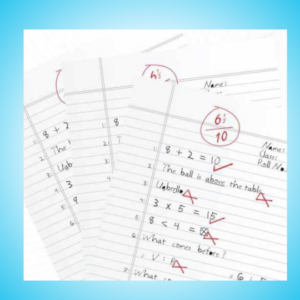

Introduction to Digital Evaluation
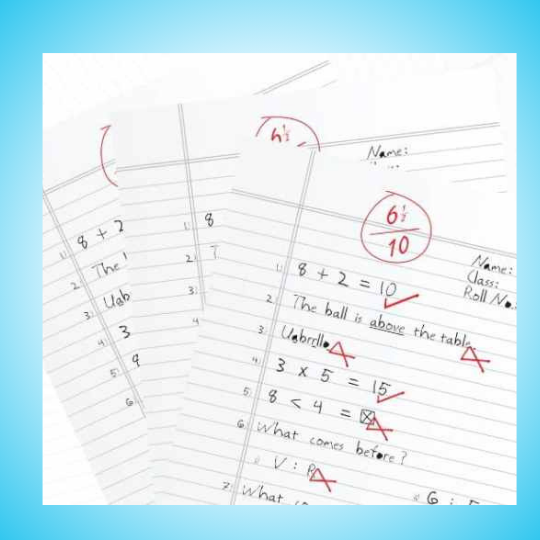
Evaluation of answer sheets of the exams conducted traditionally is a tedious and critical task. A lot of time and energy is invested by the teachers or examiners to check every question, mark the blank pages, write the marks for each question and count their total.
There is a likelihood of showing bias by the examiners if the identity of the students is not masked properly.
The assignment and distribution of answer sheets to the examiners can be cumbersome. Also, there is always a possibility of the answer sheets getting misplaced or damaged during transport.
The only solution to all these issues is the digital evaluation tool named Eklavvya-OSM. It is designed using advanced and innovative technology and can perform the work of examination controller, registrar, answer sheet evaluator, such as teachers or examiners, moderators, and result printing team all alone.
It has simplified the entire process of answer sheet evaluation. It includes many different features such as answer sheet scanning and storage, evaluation dashboard, analytics and reporting to measure performance. It can manage exam patterns, student information, examiners, moderators, and results.
After the brief introduction to the digital evaluation system, let us now understand the importance and necessity of digital evaluation and onscreen marking of the answer sheets.
The Need for Digital Evaluation of Answer Sheets
Manual answer sheet evaluation is slow, expensive and surprisingly error-prone. Before looking at the fix, it helps to see the scale of the problem it solves.
Weeks of delay
Physical handling, courier and manual tabulation stretch result declaration into weeks.
Evaluator bias
Visible student identity opens the door to favouritism and inconsistent marking.
Lost & damaged scripts
Booklets get misplaced or damaged in transit, with no audit trail to trace them.
The hidden cost of manual grading: A Hechinger Report analysis found that up to 58.8% of manually graded scripts carried scoring errors – roughly 40% of students received inflated marks and 16% were unfairly penalised. Onscreen evaluation removes that variability with a structured, auditable workflow.
The digital evaluation tool can be the ultimate solution to addressing all the issues related to digital evaluation. It makes the entire process of answer sheet evaluation easier in the following ways:
- The scanning of physical answer sheets and their storage in digital format has helped in reducing the physical handling of answer sheets.
- The feature of QR code mapping is used to mask the identity and other details of the student, which prohibits any kind of bias during evaluation.
- The evaluation dashboard can keep track of the overall progress of the answer sheet evaluation using multiple statistics and a dashboard.
- It helps in managing exam pattern, student information, examiner and moderator as well as the result analytics to keep a track on the students’ performances.
- It can also check the answer sheets by comparing it to the model answers, provides the facility to add comments on the answer sheets, mark blank pages digitally, add or delete annotations, undo previous tasks and auto-calculate the results.
Thus, we can see that there are numerous benefits of opting for a digital evaluation system. Let us move on to understand exactly how the entire process of digital evaluation actually works.
- Eliminate manual answersheet checking process.
- Check answersheets from any remote location.
- Automate result processing activities using technology.
Process of Digital Evaluation
The step-by-step process of digital evaluation of answer sheets is as follows:
Secure scanning
Physical answer sheets written by candidates are collected and scanned using high-speed scanners at a secure location.
Identity masking
Student identity (name, roll no.) is masked using a QR code left untouched by the scanners, so examiners cannot see candidate details – ensuring a fair, transparent evaluation.
Examiner assignment
Examiners log in and see a summary of sheets assigned to them, with completed and pending counts – keeping the overall progress on track.
Onscreen checking
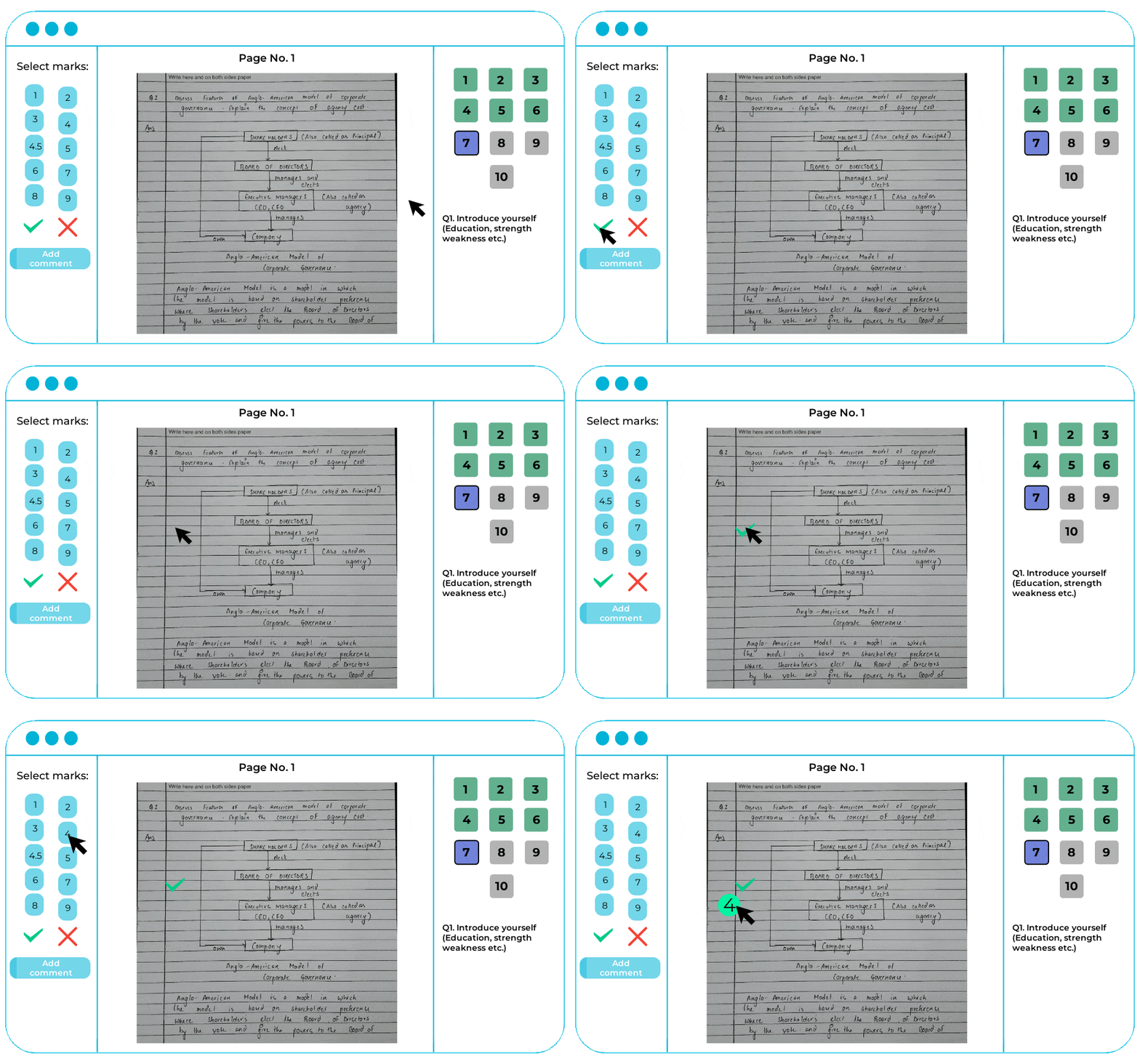
Examiners check sheets onscreen, identify and mark blank pages, view questions and answers, mark them with correct or incorrect signs and allot marks.
Auto-calculation
Examiners can undo or delete operations, add comments and calculate the total marks onscreen – digitally and instantly.
This entire process requires less than half the time needed to complete it manually. To accelerate high-volume evaluation further, platforms like Eklavvya also offer an optional AI-assisted layer that reads handwriting and suggests scores for the examiner to review – while the examiner stays in full control of every mark.
How to Check Answer Sheets Online with Digital Evaluation?
The answer sheets of subjective questions are checked remotely by the examiner. It is done in the following way:
- The answer sheets are assigned to the examiners randomly by the system. The identity and other details of the students are masked under a bar code, preventing any favouritism while evaluating.
- Examiners log in using credentials provided to them – face recognition can also be used here – so they can check papers from home or any remote location.
- The manually written answer sheets are scanned using high-speed scanners, uploaded for evaluation and stored in a digital format.
- The main copy of the answer sheet remains secure while digital copies are distributed. This saves physical storage space and protects sheets from damage or misplacement.
- The examiners and moderators receive these digital copies for evaluation.
- The OSM tool can identify blank pages. These can be struck off directly so examiners only check pages with answers – cutting wasted evaluation time significantly.
- Correct and incorrect signs are available to mark answers. Examiners assign marks, add comments, and can undo or delete previous tasks or modify annotations and marks.
- Marks allotted for each question are displayed against the question numbers. The final score is calculated and displayed by the system, and used to decide the pass or fail status of the student.
Thus, we can see how the Eklavvya-OSM tool has made Digital Evaluation of answer sheets hassle-free and time saving.
Here’s How Digital Evaluation Works
At a glance, onscreen evaluation moves an answer booklet from paper to a declared result in four connected stages:
1. Scan & mask
High-speed scanning with QR identity masking.
2. Assign
Sheets distributed to examiners for remote checking.
3. Evaluate
Onscreen marking, annotations and moderation.
4. Declare
Auto-calculated totals and instant result export.
- Eliminate manual answersheet checking process.
- Check answersheets from any remote location.
- Automate result processing activities using technology.
Advantages of Digital Evaluation
Now that we have understood the process of digital evaluation, let us check out some of the advantages:
Scanning and storing of answer sheets: Each and every page of the answer sheet is scanned by advanced high-speed scanners. These scanners scan the answer sheet with proper masking so the identity of the candidate remains sealed.
Digital correction of exam papers: The examiners or moderator don’t need to visit a specific central location to collect or check the papers. The scanned copies can be shared and checked from any remote location after logging in with credentials – cutting the risk and cost of physical handling and transport.
Auto total calculation: An examiner needs to keep track of compulsory and optional questions and marks allotted for each answer. The system considers the best of performances for optional answers and calculates marks as per the question paper pattern and marking scheme, saving a lot of time consumed during manual evaluation.
Result generation: The system can calculate the result and generate mark sheets instantly and even export them in Excel format. Manual tasks of entering and validating data and marks are eliminated. The pressure of following a timeline is completely reduced, and results are accurate and within the stipulated time.
Student request for scan copy: Most institutions must allow students to access their evaluated answer sheets. Traditionally this means identifying the physical copy, photocopying it and issuing it – significant logistical and administrative work. The onscreen marking tool eliminates this by emailing the digital copy of the evaluated answer sheet to the student.
Re-evaluation of answer sheet: If students are not satisfied with their results, they can request rechecking or re-evaluation. The Digital Evaluation tool makes this much simpler – the process is completed sooner and results are generated quickly.
Net effect: Onscreen evaluation cuts evaluation time by around 60% and compresses result declaration from weeks to days, while removing travel, transport and physical storage costs entirely.
Thus, the Onscreen Evaluation is indeed very advantageous for universities, examiners as well as students. It can help save time, money and effort.
Let us now understand the roles of examiner and moderator in the evaluation process and how their work is simplified with the help of the tool.
- Eliminate manual answersheet checking process.
- Check answersheets from any remote location.
- Automate result processing activities using technology.
You are the examiner. Select a part of the scanned answer to stamp it, award marks against the marking scheme, mark the blank page, then submit to the moderator. This is a simplified sample, not the full Eklavvya evaluation screen.
Select an answer part below, then pick a stamp. Pick the same stamp again to delete it.
Q3. Explain the water cycle and its importance. [10 marks] (Environmental Studies, sample)
Auto-total: 0 / 10 · 0 of 5 criteria marked
Time taken: the clock starts at your first click.
Submit your marks to compare them with the moderator’s.
| Criterion | You | Moderator | Difference |
|---|---|---|---|
| 1. Evaporation & transpiration | – | 2 | – |
| 2. Condensation & clouds | – | 1 | – |
| 3. Precipitation & collection | – | 2 | – |
| 4. Importance | – | 2 | – |
| 5. Sequence | – | 1 | – |
| Total / 10 | – | 8 | – |
Moderator’s reasons: part 2 says clouds are made of water vapour (they are tiny water droplets), so 1 of 2. Part 4 gives drinking & farming water as a valid point but “keeps the weather normal” is vague, so 2 of 3. These reference marks are this demo’s sample marking.
In onscreen marking, the first examiner’s marks are masked from the moderator, who runs a fresh evaluation. Every mark and annotation stays on record with the scanned sheet, so re-totalling and revaluation requests can be checked against it.
Role of Examiner During Digital Evaluation
Examiners can log into the desktop or tablet to evaluate the answer sheets. This reduces the time consumed in travelling to the location where the manually written answer sheets are stored for checking.
The examiners can evaluate the answer sheets from anywhere as per their convenience. The following facilities are provided to the examiners for simplifying the evaluation process:
1. Reference to model answers and question papers
The examiners can refer to an online copy of the model answers and question paper if they feel the need to do so. A link is provided to the examiner to refer to the required documents to speed up the evaluation process.
2. Facility to add comments on the answer sheets
This feature comes handy when the examiner wants to add some remark for a particular answer written by the student.
3. Facility to mark blank pages
It is a tedious process to check every page of an answer sheet which contains 16 pages when only the first 4 have answers, and mark the rest as blank. The onscreen evaluation tool can identify those pages beforehand so examiners can skip them while checking.
4. Add annotations to mark entries
There is a facility to assign annotations for half mark as well as No-attempt mark for a particular answer. Adding annotations is easy with the digital evaluation process, and there are also annotations available for marking correct or incorrect answers.
5. Facility to undo the previous tasks
If the examiner has added the wrong annotation then it is possible to remove or erase it using the undo option.
6. Delete annotations
Examiners also have the facility to delete annotations added by mistake. Examiners can select a question and click the delete annotation button to remove annotations added for a particular answer.
7. See auto-calculation of results
The digital evaluation system provides an easy way for automatic calculation of results. The result is calculated based on the examination pattern, optional questions, compulsory questions, number of questions attempted, extra questions attempted, model answers, etc. Manual tabulation and total calculation is eliminated and result processing becomes simpler.
8. Facility to rotate the answer sheet
The onscreen evaluation system incorporates a rotation feature to enhance the assessment of answer sheets. This proves useful when scans are improperly oriented or when submissions such as diagrams deviate from conventional formats. Should a student’s response be oriented horizontally yet appear vertically due to scanning discrepancies, evaluators can use the rotation tool to align the document correctly. This ensures each page can be adjusted for optimal viewing, supporting a precise and streamlined evaluation process.
Role of Moderator During Digital Evaluation Process
Level 1 – Examiner
First evaluation of the assigned answer sheets, with marks and annotations recorded digitally.
Level 2 – Moderator
First examiner’s marks are auto-masked, so the moderator runs a fresh, unbiased evaluation.
- A moderator is like the second step in the process of evaluation that comes after the examiner.
- Moderators are assigned to certain answer sheets that are already evaluated by the first-level examiner.
- The moderator assigned for evaluation is based on various criteria defined by the educational institutions or universities.
- In the case of physical evaluations, manual masking of annotations is needed to hide marks entered by the first-level examiner.
- But with onscreen marking, all marks entered by the previous examiner are masked automatically and the moderator can initiate a fresh evaluation of the answer sheet.
- As a result, the job of moderation becomes easy due to the digital evaluation.
Built-in quality control: Auto-moderation assigns scripts for a second review automatically, and every re-evaluation request follows a tracked workflow – so consistency and turnaround are maintained without manual coordination.
Let us now see how digital evaluation helps in generating the results.
Result Generation Process using Digital Evaluation
The onscreen marking tool can also track batch performance for individual questions – for example, the percentage of students who attempted a question, who skipped it, and who got it right and received full marks or attempted it but received no marks.
Generation of results is a tedious task if done manually. During physical evaluation, marks must be added manually and calculated, which can delay result declaration.
Result processing involves verifying marks, entering them in the system and calculating them to generate the result. The entire process is automated and simplified with the digital evaluation process.
A dashboard uses multiple statistics – number of answer sheets evaluated, pending evaluation count, examiner-wise status, stream-wise status and average evaluation time – to keep track of overall progress.
The system can track time taken by the examiner and moderator, helping analyse the average time per sheet, total evaluation time, and efficiency comparisons across examiners.
- Eliminate manual answersheet checking process.
- Check answersheets from any remote location.
- Automate result processing activities using technology.
Remuneration Calculation for Examiner and Moderator
The manual process of calculating examiner and moderator fees is time-consuming and resource-intensive.
The Challenge of Manual Calculations of Remuneration
Traditionally, the task of compensating examiners for their efforts in evaluating answer sheets has been cumbersome. The process involves meticulous counting of answer booklets reviewed by each examiner, followed by the complex calculation of due remuneration. This manual method is not only time-consuming but also prone to errors, leading to potential discrepancies and dissatisfaction among the examiners.
A Seamless Solution: Automated Remuneration Calculation
Enter the on-screen marking system – a game-changer in the educational assessment landscape. This system introduces an automated way to calculate the remuneration of examiners, streamlining the entire process from evaluation to payment.
Let’s explore the benefits this technology offers:
Accurate and efficient processing
With the on-screen marking system, the calculation of payments based on the number of answer booklets evaluated is done automatically. This precision eliminates errors associated with manual calculations, ensuring that each examiner is fairly compensated for their contribution.
Simplified data collection
The system adeptly handles the collection of essential examiner details, such as Aadhaar and bank account information. This consolidation of data facilitates a smooth and secure payment process, directly depositing remuneration into the respective bank accounts of the examiners.
Time and resource saving
By automating the remuneration report calculation, institutions can save a significant amount of time and resources. This efficiency not only benefits the administrative staff but also enhances the satisfaction levels of the examiners, as they receive timely and accurate payments.
Compare manual paper checking with onscreen marking for one exam cycle: days to finish evaluation, total cost and cost per answer sheet. Every default below is an editable assumption — replace it with your own university’s numbers.
For 50,000 answer sheets and 100 examiners, onscreen marking finishes evaluation in 7 days instead of 17 (10 days sooner) and costs ₹2,12,500 less (₹4.25 less per sheet).
| Per exam cycle | Manual | Onscreen |
|---|---|---|
| Days to complete evaluation | 17 | 7 |
| Examiner fees | ₹12,50,000 | ₹12,50,000 |
| Logistics / scanning | ₹4,00,000 | ₹3,00,000 |
| Re-totalling / revaluation | ₹2,12,500 | ₹1,00,000 |
| Total cost | ₹18,62,500 | ₹16,50,000 |
| Cost per sheet | ₹37.25 | ₹33.00 |
Totalling errors: onscreen marking calculates each sheet’s total automatically from the marking scheme, so hand-totalling mistakes do not arise.
Days assume every examiner marks every working day; add buffer for leave and moderation. Moderation, results processing and one-time setup are not included.
Summary
The examination system can succeed if students, teachers and universities are satisfied with the overall process associated with evaluation. The digital evaluation system helps to not only make this process professional, error-free and hassle-free but also complete it in record time within the stipulated number of days.
We have been working with many reputed education institutes and universities to simplify their subjective answer sheet evaluation process using the most advanced features of technology.
The digital evaluation process has been successfully adopted by many universities and educational institutions to upgrade to new and modern ways of conducting online examinations and their evaluation using the best technology available.
"The platform is user-friendly and cost-effective, which made it an excellent choice for our needs. I highly recommend Eklavvya for anyone seeking a reliable and efficient platform."
Ashish ApteController of Examination, NMIMS University
"Eklavvya's onscreen evaluation system is a mature product. Our university completed the entire activity with result declaration in record time and high efficiency. Our faculty found it efficient and user-friendly."
Mr. Shantilal T. GhalmeController of Examinations, Indira College of Commerce and Science
"With Eklavvya's onscreen marking system, the checking process of the answer sheet got a lot easier and smoother."
Prof. Shubhashish GoswamiController of Examination, Dev Bhoomi University