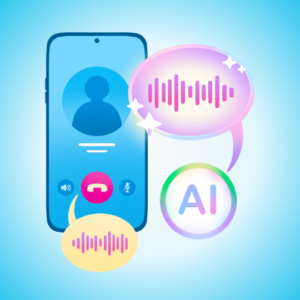
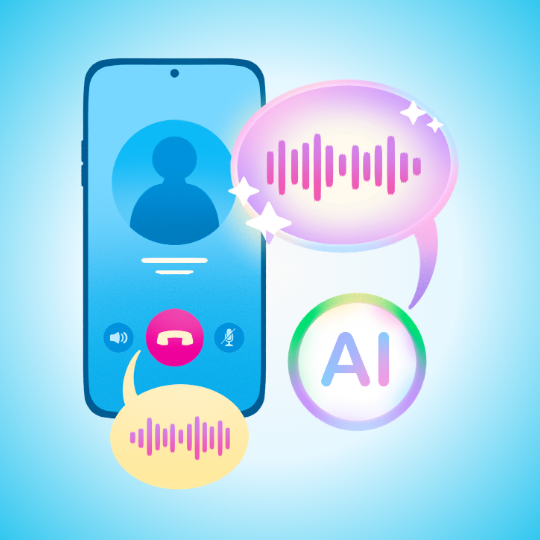
An AI telephonic interview is a first-round screening call made by an AI voice agent instead of a recruiter.
The agent calls the candidate or takes their call, asks the screening questions for the role, and hands the recruiter a score, a summary and a transcript.
The candidate needs nothing but a phone.
Why the phone, and why now. India had 1,293 million mobile subscribers at the end of August 2026, with wireless tele-density at 91.69%, according to TRAI’s monthly subscription data.
Laptops and stable video connections are far less common, especially among field sales, retail, support and fresher candidates in tier-2 and tier-3 towns. A screening round that needs a webcam quietly filters out many of the people you want to hire.
Source: TRAI telecom subscription data, August 2026 (via TelecomTalk).
So who is actually making your first-round screening calls today?
How many of them never connect on the first attempt?
And how much does each recruiter’s five-minute filtration call really cost when you have 2,000 applicants?
This guide explains what an AI telephonic interview is, how the screening call works, how it compares with a human phone screen and a video interview, and where it fits in a multi-round assessment for campus placements, admissions and volume hiring.
📞 What Is an AI Telephonic Interview?
An AI telephonic interview is a structured first-round screening interview conducted over an ordinary phone call by an AI voice agent.
It replaces the repetitive “basic filtration” call a recruiter makes to every applicant, not the final interview.
The round exists to answer a small number of questions quickly. Is the candidate still interested, available, located where the role is, and able to communicate at the level the job needs?
Those are exactly the questions a recruiter asks 200 times a week.
⏳ Why the First-Round Phone Screen Is the Hiring Bottleneck
The phone screen is short, but it is repeated for every applicant, and it depends on two people being free at the same moment.
At volume, this round delays every stage after it. Candidates who applied on Monday wait until Thursday for a call, and the best ones have accepted another offer by then.
🗣️ How an AI Telephonic Interview Works, Minute by Minute
A typical AI screening call lasts about five minutes and follows the same structure every time.
The agent identifies itself as AI before any question
Consent comes first. The agent opens by saying it is an AI interviewer calling on behalf of the company and that the call is recorded, then asks whether the candidate has a few minutes.
A candidate who says no is not argued with. The rules behind this, including India’s DPDP Act and TRAI calling norms, are covered in Splashgain’s guide to AI voice agent use cases and trends.
Candidates can reschedule in plain language
If the candidate says “call me tomorrow at 2:30”, the agent understands it and re-queues the call for that slot.
If the time falls outside the campaign’s calling window, it politely offers the nearest allowed time instead.
Questions come from the role, the JD and the resume
The recruiter supplies a short HR brief and the job description. The agent can also read the candidate’s resume, so it asks about the experience that person actually claims.
That is the same principle behind adaptive AI interviews: the next question should depend on the candidate in front of you.
Unanswered calls retry automatically
The agent re-dials unanswered and busy numbers with the retry count and gap the recruiter sets, and only inside the calling window, such as Monday to Friday, 10 am to 6 pm.
A missed call stops being a lost candidate.

- Skill, aptitude and communication tests with AI proctoring.
- Adaptive AI interviews that probe every answer.
- One skill report per candidate across every round.
- Works alongside Splashgain’s AI telephonic interview agent.
🔀 Inbound vs Outbound AI Telephonic Interviews
Inbound suits candidates who prefer to choose their own time. Outbound suits high-volume drives where waiting for candidates to act causes drop-off.
| Mode | How it starts | Best for |
|---|---|---|
| Inbound | Candidate receives an email invitation with a number and calls in during the validity period. Reminder emails go out automatically | Experienced hires, candidates currently employed, admissions applicants |
| Outbound | Agent dials the candidate list inside the calling window, with automatic retries and rescheduling | Fresher batches, field sales, support and retail drives with hundreds of applicants |
Many teams run both: outbound for the full applicant list, with an inbound number in the invitation email for anyone who prefers to call back.
📊 What a Telephonic Interview Report Contains
Each completed call ends with a score for overall fit plus communication, domain knowledge, motivation and experience, a short written summary, the full transcript and the recording.
Every score is backed by quotes from the candidate’s own answers, and the agent never rejects anyone. A recruiter reads the report and decides.
For the full feature list, sample calls in Hinglish and the recruiter console, see the AI telephonic interview agent built by Splashgain, the company behind Eklavvya.
⚖️ AI Telephonic Interview vs Human Phone Screen vs Video Interview
The AI telephonic interview wins on reach and consistency at volume. The human screen wins on judgement for senior and sensitive roles.
The video interview wins when you need to see the candidate.
| Factor | Human phone screen | AI telephonic interview | AI video interview |
|---|---|---|---|
| Candidate needs | ✅ Any phone | ✅ Any phone, any network | ❌ Smartphone or laptop, camera, data |
| Recruiter time per candidate | ❌ 5-10 min plus redials | ✅ Review only | ✅ Review only |
| Consistency of questions and scoring | ❌ Varies by recruiter | ✅ Same structure every call | ✅ Same structure every interview |
| Missed calls and rescheduling | ❌ Manual | ✅ Automatic, inside a calling window | ✅ Candidate chooses the time |
| Sees body language and setting | ❌ No | ❌ No | ✅ Yes, with proctoring |
| Judgement on senior or sensitive roles | ✅ Strong | ❌ Not designed for it | ❌ Not designed for it |
| Candidates who refuse to speak to an AI | ✅ Not an issue | ❌ Offer a human fallback | ❌ Offer a human fallback |
| Best for | Final rounds, leadership, negotiation | High-volume, phone-first screening | Second round, communication and presence |
🧭 Where the Telephonic Round Fits in a Multi-Round Assessment
The telephonic interview is round one. It answers “should we assess this person further?”, not “should we hire them?”.
Each later round tests something a five-minute call cannot.
AI telephonic interview: interest, availability, basic fit
Five minutes on any phone. Filters the full applicant list down to the people worth assessing.
Online skill and communication assessment
Aptitude, domain and communication skills tested against a fixed rubric, with AI proctoring for high-stakes drives.
Adaptive AI interview: depth on the shortlist
An adaptive AI interview probes each answer with follow-up questions and scores it into the same skill report.
Human panel: the final decision
Interviewers meet only the top band, with every earlier score, transcript and recording in front of them.
| Round | What it measures | What it cannot tell you |
|---|---|---|
| Telephonic interview | Interest, notice period, location, shifts, spoken communication | Aptitude, written skills, technical depth |
| Skill + communication test | Aptitude, domain knowledge, listening, reading, writing | How the candidate reasons when probed |
| Adaptive AI interview | Problem-solving, role knowledge, depth behind each claim | Team and culture fit |
| Human panel | Judgement, culture fit, negotiation | Little at volume: it is the bottleneck the earlier rounds protect |
Before you add a telephonic round
- Keep it to 5-7 questions and about five minutes. Anything deeper belongs in round two or three
- Set one pass rule per role, such as “joins within 30 days and communication score above the cut-off”
- Send everyone who passes the same assessment link, so round two compares like with like
- Offer a human contact number to any candidate who asks for one
- Review the cut-off after the first 20 calls, not once a season
🏢 Who Uses AI Telephonic Interviews
The AI telephonic interview fits any drive where the first round is short, repetitive and high in volume.
Teams moving from a manual phone screen can do it in stages. Our guide to audio-based bulk interviews and this hiring automation guide cover what to automate first.
🏆 AI Interviews on Eklavvya
Eklavvya runs AI interviews, communication assessments and proctored skill tests for 500+ organisations across recruitment, admissions and campus placements.
Key takeaways
- An AI telephonic interview is a first-round screening call run by an AI voice agent, inbound or outbound.
- It reaches candidates on any phone, which matters in a market with 1.29 billion mobile subscribers and far fewer laptops.
- The agent says it is an AI and that the call is recorded, asks for consent, and reschedules in plain language.
- Every call ends with evidence-backed scores, a summary and a transcript. The agent never rejects anyone; a recruiter decides.
- It is round one of four: phone screen, skill and communication test, adaptive AI interview, human panel.
- Use it for volume screening. Keep humans for final rounds and senior roles.
🔭 The Way Forward for Candidate Screening
The first-round phone screen is the most repetitive conversation in hiring, and it is the first one AI can take over completely.
Recruiters who hand it to an AI agent spend their time on the candidates who already cleared it.
See how the next round works with the free AI interview, or explore the full AI interview platform.
- Round 1: AI telephonic screening in 6 Indian languages.
- Round 2: proctored skill and communication assessment.
- Round 3: adaptive AI interview for the shortlist.
- Round 4: your panel, with every score and transcript in hand.
❓ Frequently Asked Questions About AI Telephonic Interviews
What is an AI telephonic interview?
An AI telephonic interview is a first-round screening interview conducted over an ordinary phone call by an AI voice agent.
The agent asks the role’s screening questions, follows up on unclear answers, and gives the recruiter a score, summary and transcript.
How does an AI phone screening call work?
The agent introduces itself as an AI, names the company and role, and asks whether the candidate has time. It then asks 5-7 screening questions drawn from the job description and resume, and ends the call in about five minutes.
If the candidate is busy, the agent reschedules within the allowed calling window.
Do candidates know they are talking to an AI?
Yes. A well-run AI telephonic interview says it is an AI and that the call is recorded in the opening line, and asks for consent before any screening question.
Candidates who prefer a human should be offered a contact number.
What comes after the AI telephonic interview?
Candidates who pass the phone screen usually take an online skill and communication assessment, then an adaptive AI interview, and only the top band meets a human panel.
Each round adds evidence the five-minute call cannot collect.
Can an AI telephonic interview replace the final interview?
No. It is designed for the high-volume first round: interest, availability, basic fit and communication.
Final rounds, senior roles and negotiation still need a human interviewer, ideally working from the AI’s transcript and score.
📚 Related Reading
About the Author

Swapnil is a seasoned technology leader with over 18 years of experience in the design, development and implementation of Information Technology projects.
Before founding Splashgain, he contributed his expertise at TATA Consultancy Services (TCS) and Geometric Software, where he honed his skills in large-scale software development and enterprise solutions.
His core areas of expertise include Agentic AI, Generative AI, Large Language Models (LLMs), Scalable Web Architecture and blogging on emerging technologies.
Swapnil continues to explore the intersection of AI innovation and practical business applications, driving forward the future of intelligent systems.