Introduction
Distance learning is gaining more and more acceptance and popularity among students and working professionals.
This increased acceptance of distance learning programs is further enhanced due to the great flexibility that these distance learning courses offer, when one opts for a distance learning course, one breaks the barrier of geographical location and time.
With this new trend of pursuing online degrees through distance learning, we can only keep finding how to make it only a much smoother journey into the technological world of education and learning.
As we dive deeper into it we only keep coming up with easier ways of learning whether it’s virtual classrooms or the evaluation of assessments online.
Online assessments are a great way to assess the knowledge of students that they acquire in online distance learning courses, these assessments validate the reliability of online courses.
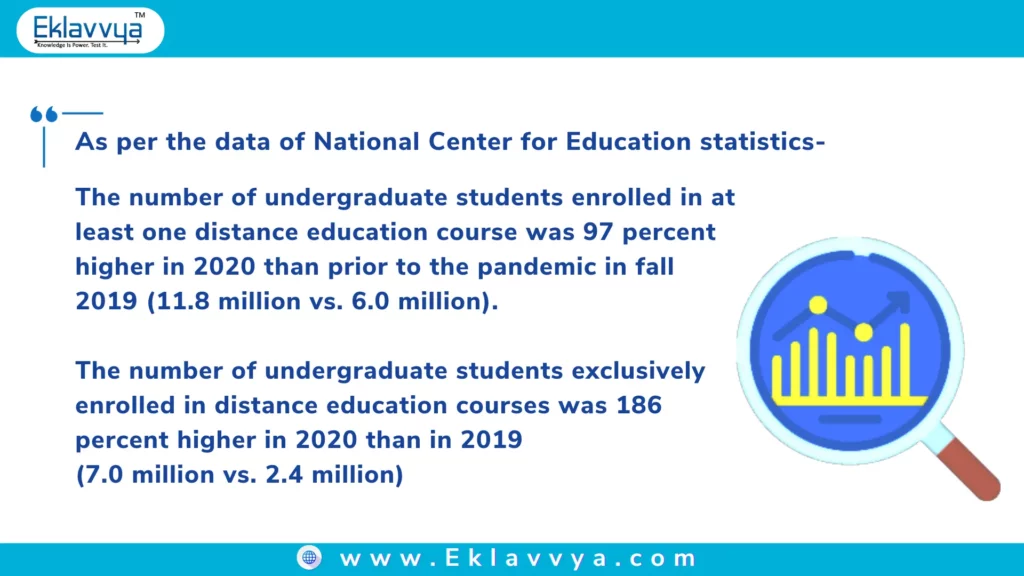
The data is collected from limited subjects, representing students of the United States.
Credit- NCES
-Increased enrollment to distance learning courses surely makes it very much predictable that the distance learning field will keep growing at such a high pace in upcoming years.
-Adopting digital tools for delivering and managing these distance learning courses is inevitable and this is the best time to adopt the tools, online assessments are highly important when it comes to distance learning.
Here are 7 ways to simplify distance learning assessments-
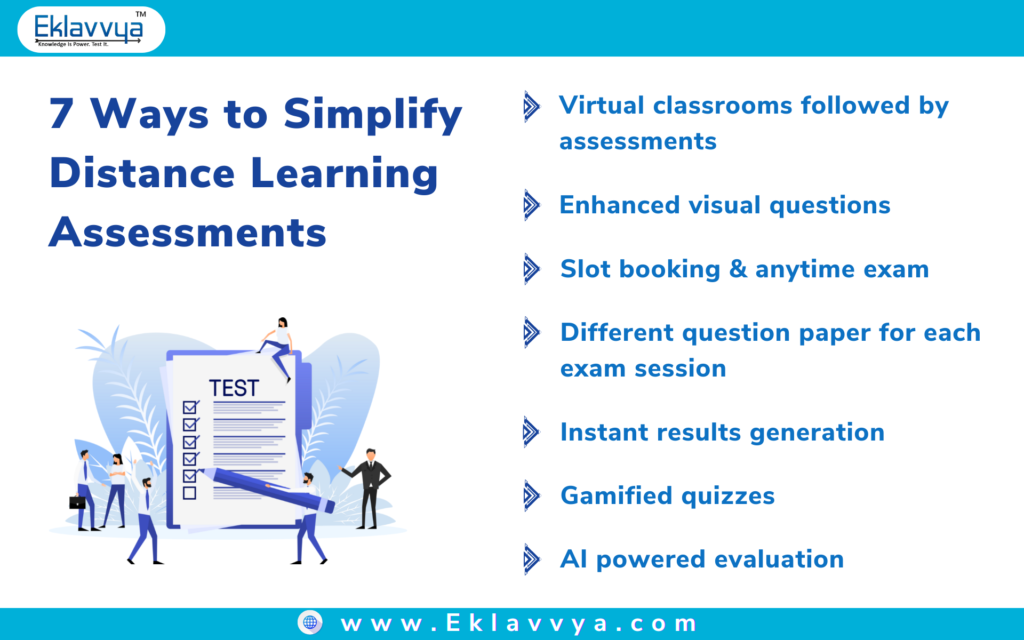
1. Virtual Classrooms followed by assessments:
Virtual classrooms are the number one go-to when a student decides to start pursuing distance learning. Virtual classrooms are a great way of easily accessing online education.
Virtual classrooms have been proven to be the most efficient way of learning online if a student wants to take up distance learning. Virtual classrooms give easy access to students and are a great way to communicate and interact with students.
Teaching through virtual classrooms has gotten more and more students to go for online education instead of traditional ones. Virtual classrooms provide not just a simple way for students and teachers to connect, they also provide ways to provide visuals and presentations or videos for smarter and more effective learning.
Examples of virtual classrooms- MS teams, Zoom, Google Meet, Adobe Connect
It is a best practice to assess the students’ understanding of the topic right after the class, with advanced online assessment platforms, you can schedule a test in advance for the topic being taught.
Advanced learning management systems support academic content delivery, and customized assessments with flexible schedules, here are the 5 must-have features of learning management systems.
Further reading- Online Exam Scheduling Process
2. Enhanced visual questions:
Assessments can have a lot of limitations to them and they can limit a student’s learning to just testing their intellect on a specific topic but with no understanding of how to execute it practically.
When taking such assessments in online mode there is a huge possibility that this expectation may not be met as it can be difficult to evaluate them too.
Therefore with the use of tools and technologies, it would be only a matter of time for the assessments are limited to students on campus and difficult.
Enhanced visual Questions make these online assessments much easier and the students get to answer a certain question with much more freedom.
Further reading-
Image Based Questions During Exam
Video-Based Questions During Exam
3. Slot Booking and Anytime Exam:
One of the greatest demands of students and working professionals is to have time flexibility in learning, this demand further extends to assessments as well. The learners wish to learn at their own pace and appear for the assessment at their preferred time slot.
Slot booking comes up as a solution to match up the demands of students and gives them a chance to choose their preferred schedule, this enables them to manage their schedule efficiently and take up the course conveniently.
Furthermore, students can appear for assessment anytime, the assessment platform works 24×7 giving great flexibility to learners without impacting the overall reliability of the examination.
Further reading-
Online Exam Slot Booking Process
4. Different question papers for each exam session:
Slot booking enables the students to appear for the assessment in phase wise manner, you may wonder that the questions may get leaked and it is not possible to set separate/unique question papers for each of the students.
Well, that is not the case, with advanced online assessment systems, it is possible to create a large number of unique question papers from the question bank without impacting the overall difficulty of the question paper.
This feature lets the paper setter select the difficulty, subject, and topic-wise weightage, with these parameters, the system creates a unique question paper for each of the students which makes the assessments highly reliable.
Further reading- Automatic Question Paper Generation
5. Instant Results after the end of exams with objective questions:
In the case of conventional examinations, it is quite common to wait for at least a month to get the results in hand. On the brighter side, with the latest assessment technology, it is possible to auto-generate the results right after the completion of the examination.
Furthermore, the students can see their marks and correct answers once they submit the exam.
6. Gamified Quizzes:
With the conversation of making it easier to conduct assessments for students, there’s nothing better than game-incorporated learning. Quizzes in the form of different games can not only get students to completely emerge and understand what they are learning but also make it a fun way for the students to learn efficiently.
It will only make it easier for the teachers to take up a recap or summary of a topic to see who is still struggling to understand.
Gamified learning can also bring in the benefits of giving instant feedback to the teachers on what a student may need to improve and what part of the topic may have to be summarized again. Gaming can be the best form of infusion into learning and education in today’s world.
7. AI Evaluations:
The conventional evaluation of assessments has been lengthy and tedious work. With the digital takeover in the education sector, it would only be fair if it was made possible to make evaluation easier and online.
AI evaluation methods for evaluating assessments is one of a kind system that makes it easier to check and mark assessments by using data-driven AI tools that mark the answers and can be a guide to the teachers.
AI tools help you to auto-evaluate the descriptive answers, the evaluator can glance through the AI inputs on the answer and can cross-check the awarded marks, which makes the evaluation process faster than ever.
Bonus Tip : Use Bulk Online Viva Technique to Assess Student
If you wish to conduct a viva or oral exam of the student then it is essential to have an interviewer on the other side.
But what if you want to assess thousands of candidates using viva?
You can use technology like online viva to conduct concurrent vivas for thousands of students easily. Student would be shown questions on the screen and student is supported to record the answer in the form of voice.
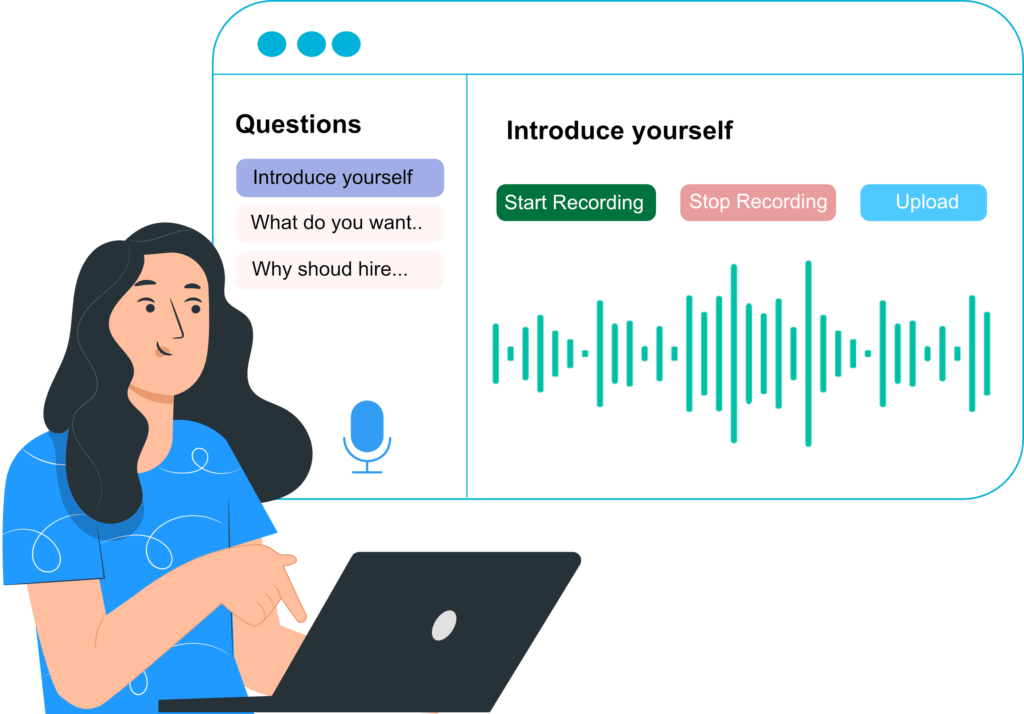
Evaluators can easily listen to the voice and assess students’ knowledge associated with that subject. Using technology it becomes easy to assess the communication skill, and domain knowledge of the student.
With the help of software, AI, and Virtual classrooms online learning and assessments can be made not only a lot easier but also very efficient and fun! From Virtual classrooms and Interactive chatbots that make it easier to connect, software to work on assessments, and AI to evaluate the assessments. We only move further into making these trends easier and smoother.