A multi-round candidate assessment splits screening into short stages. Each stage answers one question, and only the people who pass move on.
Done well, it puts four rounds of evidence in front of your panel and asks it to meet only the top band.
Why round one now starts on the phone. India had 1,293 million mobile subscribers at the end of August 2026, with wireless tele-density at 91.69%, according to TRAI’s monthly subscription data.
Laptops and stable video connections are far less common among field sales, retail, support and fresher candidates in tier-2 and tier-3 towns. If round one needs a webcam, it quietly filters out many of the people you want to assess.
Source: TRAI telecom subscription data, August 2026 (via TelecomTalk).
So how many of your 2,000 applicants does your panel actually need to meet?
Which round is filtering them today, a recruiter’s phone or a gut feeling?
And does round three know what round one already learned?
This guide shows how to design a multi-round assessment for campus placements, admissions and volume hiring: what each round measures, the pass rule between rounds, and how to keep one report across all four.
⏳ Why a Single Interview Round Breaks at Volume
A single interview tries to test interest, skills, depth and fit in one sitting. At 2,000 applicants, that sitting never happens for most of them.
Splitting the assessment into rounds fixes all three. Cheap, automated rounds go first, and the expensive human round goes last.
Candidates who applied on Monday get their first round the same day, not on Thursday after the best of them have accepted another offer.
🧭 The Four Rounds of a Multi-Round Assessment
Each round answers one question: should we assess this person further? Only the last round asks whether to hire or admit them.
Phone screen: interest, availability, basic fit
About five minutes on any phone. Filters the full applicant list down to the people worth assessing.
Online skill and communication assessment
Aptitude, domain and communication tested against a fixed rubric, with proctoring for high-stakes drives.
Adaptive AI interview: depth on the shortlist
Follow-up questions on every answer, scored into the same skill report.
Human panel: the final decision
Interviewers meet only the top band, with every earlier score, transcript and recording in front of them.
Round 1: the phone screen
Round one checks the facts a recruiter would otherwise ask 200 times a week: still interested, notice period, location, shifts, and whether spoken communication meets the role’s bar.
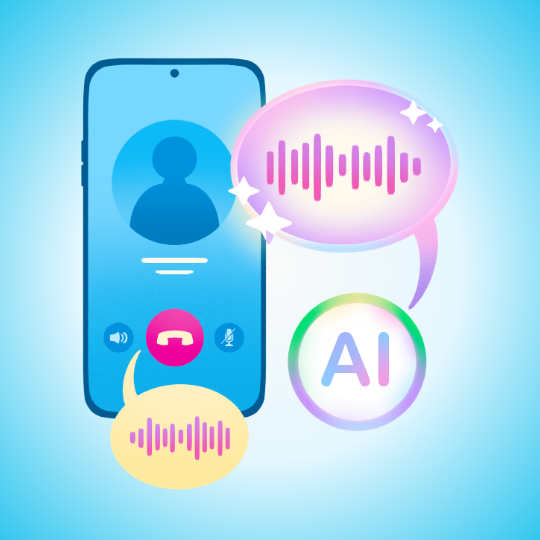
Most teams now hand this call to an AI telephonic interview agent built by Splashgain, the company behind Eklavvya. It dials the list, reschedules in plain language, and returns a score and transcript for each call.
Round 2: skill and communication assessment
Round two is where the evidence becomes comparable. Every candidate who passed the phone screen gets the same test, the same time limit and the same rubric.
Typical sections are aptitude, domain questions and a communication skills assessment covering listening, reading, writing and speaking.
For campus drives and admissions, where the stakes are high and candidates test from home, add AI proctoring.
Round 3: adaptive AI interview
Round three tests the depth behind each claim. An AI interview asks the next question based on the last answer, so a candidate who memorised the basics gets probed further.
It runs at any hour, in the candidate’s language, and adds its scores to the report rounds one and two started.
Round 4: human panel
Round four is the only one that needs a senior person’s calendar. The panel judges culture fit, judgement and negotiation, the things no automated round is built to measure.
Because the panel sees only the top band, it can spend 30 minutes on each candidate instead of 5.
| Round | What it measures | What it cannot tell you |
|---|---|---|
| Phone screen | Interest, notice period, location, shifts, spoken communication | Aptitude, written skills, technical depth |
| Skill + communication test | Aptitude, domain knowledge, listening, reading, writing | How the candidate reasons when probed |
| Adaptive AI interview | Problem-solving, role knowledge, depth behind each claim | Team and culture fit |
| Human panel | Judgement, culture fit, negotiation | Little at volume: it is the bottleneck the earlier rounds protect |

- Skill, aptitude and communication tests with AI proctoring.
- Adaptive AI interviews that probe every answer.
- One skill report per candidate across every round.
- Works alongside Splashgain’s AI phone screening agent.
🚦 Setting the Pass Rule Between Rounds
The pass rule decides who moves on. Write it down per role before round one starts, not after you see the scores.
| Between | Example pass rule | Who decides |
|---|---|---|
| Round 1 → 2 | Joins within 30 days, location matches, communication score above the cut-off | ✅ Recruiter reviews the AI score and transcript |
| Round 2 → 3 | Top 30% overall, with no section below the minimum | ✅ Rule applied to the rubric scores |
| Round 3 → 4 | Top band on the AI interview, plus a recruiter check of flagged answers | ✅ Recruiter confirms the shortlist |
| Round 4 | Panel decision | ✅ Humans only |
Before you launch a multi-round drive
- Write one pass rule per round, per role
- Send everyone who passes a round the same next-round link, so you compare like with like
- Carry one candidate ID across all four rounds, so the panel sees a single report
- Offer a human contact number to any candidate who asks for one
- Review each cut-off after the first 20 candidates, not once a season
🏢 Who Uses Multi-Round Assessments
A multi-round assessment fits any drive where applicants far outnumber panel slots.
Teams moving from manual screening can automate one round at a time. Our guides to audio-based bulk interviews and hiring automation cover where to start.
🏆 Multi-Round Assessments on Eklavvya
Eklavvya runs AI interviews, communication assessments and proctored skill tests for 500+ organisations across recruitment, admissions and campus placements.
Key takeaways
- A multi-round assessment splits screening into short stages, each answering one question.
- Four rounds work for most drives: phone screen, skill and communication test, adaptive AI interview, human panel.
- Round one belongs on the phone in India, where mobile reach far exceeds laptop access.
- Write one pass rule per round before the drive starts.
- A recruiter signs off on every rejection; AI rounds rank and summarise.
- Carry one candidate report across all rounds, so the panel meets only the top band with full evidence.
🔭 The Way Forward for Candidate Screening
The rounds that repeat the same questions for every applicant are the ones automation takes over first.
Panels that only meet candidates who cleared three rounds spend their time on decisions, not filtering.
Try round three yourself with the free AI interview, or explore the full AI interview platform.
- Round 1: AI phone screening in English and 5 Indian languages.
- Round 2: proctored skill and communication assessment.
- Round 3: adaptive AI interview for the shortlist.
- Round 4: your panel, with every score and transcript in hand.
❓ Frequently Asked Questions About Multi-Round Assessments
What is a multi-round candidate assessment?
A multi-round candidate assessment splits screening into short stages, typically a phone screen, a skill and communication test, an AI interview and a human panel.
Only candidates who pass each round move to the next.
How many rounds should a candidate assessment have?
Four rounds suit most high-volume drives. Smaller or senior hiring can merge the skill test and AI interview into one round.
Add a round only if it measures something the others cannot.
What comes after the telephonic round?
Candidates who pass the phone screen usually take an online skill and communication assessment, then an adaptive AI interview. Only the top band meets a human panel.
Each round adds evidence a five-minute call cannot collect.
Who decides which candidates move to the next round?
A recruiter, using a pass rule written per role before the drive starts. AI rounds score and summarise each candidate.
A human signs off on every rejection.
Can a multi-round assessment be used for admissions?
Yes. Institutions use the same structure to shortlist applicants: a phone or online first round, a skill or aptitude test, an AI admission interview, then a faculty panel for the final list.
📚 Related Reading
About the Author

Swapnil is a seasoned technology leader with over 18 years of experience in the design, development and implementation of Information Technology projects.
Before founding Splashgain, he contributed his expertise at TATA Consultancy Services (TCS) and Geometric Software, where he honed his skills in large-scale software development and enterprise solutions.
His core areas of expertise include Agentic AI, Generative AI, Large Language Models (LLMs), Scalable Web Architecture and blogging on emerging technologies.
Swapnil continues to explore the intersection of AI innovation and practical business applications, driving forward the future of intelligent systems.