
In This Article
ToggleIntroduction
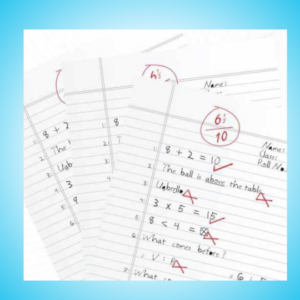
It is 11 p.m. and an examiner is on script number 180, eyes blurring, marking scheme half-remembered. The first papers got careful attention; these last ones get a glance.
This is how most answer sheets are still checked in 2026 and it is exactly why results get disputed, re-evaluations reverse marks, and students lose trust in the grade on the page.
AI answer sheet checking changes that. Modern handwritten answer sheet checking software reads scripts, scores them against your model answer and rubric, and hands faculty a reviewable result with a full audit trail.
Institutions using it declare results in 8 days instead of 45 and save 200+ faculty hours every evaluation cycle – while removing the fatigue and handwriting bias that cause most marking errors.
Here is how it works, what the latest research shows, and where it fits.
The Hidden Crisis in Traditional Exam Evaluation
Manual evaluation looks reliable from the outside. The research says otherwise. The problem is not lazy examiners – it is human limits applied at the exam scale.
The numbers from 2025 are blunt. Around 58% of educators admit to unconscious grading bias – favouring neat handwriting, penalising non-standard grammar, or going easy on students they already rate highly, according to 2025 surveys of US teachers.
When researchers measured raw error, manual grading carried an average deviation of about 7.5 percentage points per problem – close to a full letter grade of noise on every question.
And the workload is unsustainable: teachers spend 7-10 hours a week grading, with a single 120-student essay set consuming up to 60 hours of review.
The modern risk: the costliest failure is no longer a single wrong mark – it is the inability to prove how a script was evaluated when a student disputes it. Without an audit trail, one mis-assigned or unassessed answer sheet undermines confidence in every result.
This is the gap AI closes. For a broader perspective, refer to our breakdown of answer sheet evaluation challenges and solutions.
- Watch OCR turn messy handwriting into digital text
- See AI score answers against your model answer
- See the rationale behind every mark adjustment
- Explore blind grading with QR identity masking
What AI Answer Sheet Checking Actually Does
“AI grading” is often sold as keyword matching. The systems that institutions trust in 2026 are far more capable – they read, reason and explain.
The AI grading tools market reached $472 million in 2025 precisely because the technology crossed the threshold from gimmick to dependable.
Platforms like Eklavvya’s AI onscreen marking system combine six core capabilities:
Reading the script: handwriting OCR, you can actually verify
The primary task of any answer sheet checking software is to read what the student wrote, and this is where most tools have historically fallen short.
An answer sheet is not a printed form; it is cramped, slanted, struck-through handwriting that legacy OCR mangles. Modern systems use handwriting recognition powered by vision-LLMs and intelligent character recognition, which interpret context the way a human reader does, rather than matching characters in isolation.
The critical detail is verifiability: the extracted digital text stays linked to the original scanned page, so an examiner can glance at both side by side and confirm the AI read “photosynthesis” and not “photosynthesis” with a missing clause. Reading the script correctly is the foundation – get it wrong, and every score downstream is wrong too.
Scoring with judgement, not keyword matching
Once the text is read, the harder task is evaluating it and a credible system grades the way a good examiner does, not by hunting for keywords.
A domain-tuned LLM compares each answer against your model answer and rubric, weighs whether the student demonstrated understanding even when the phrasing differs, and awards partial credit for partially correct reasoning.
Just as importantly, it shows its working: every mark comes with a rationale explaining why points were given or deducted, so the score is never a black box.
Because no two exams hold candidates to the same bar, the four evaluation modes – Default, Easy, Moderate and Strict – let you dial the strictness to the assessment, from rewarding effort on a formative test to demanding complete, accurate answers on a final.
The examiner sets the standard; the AI applies it consistently to all 10,000 scripts.
Fairness, languages and a record that survives a dispute
The remaining capabilities exist to make evaluation fair and defensible at scale. Blind grading through QR-code identity masking removes the single biggest source of unconscious bias – the AI and the reviewing examiner never see whose paper they are marking, only the answer.
Multi-lingual evaluation across English, Hindi, Marathi, Tamil and Telugu extends that fairness to regional-language exams that English-only tools simply cannot serve, with feedback that can be translated for the student.
And underneath all of it runs the layer institutions care about most when a grade is challenged: a complete audit trail with role-based access for COE, examiner, scanner, moderator and re-evaluator, plus an automated, timeline-tracked re-evaluation workflow.
When a student disputes a result, the institution does not defend a memory. It replays the exact record of how the script was read, scored, reviewed and approved.
Why handwriting recognition finally works: legacy OCR struggled with handwritten scripts. Current platforms use handwriting recognition powered by vision-LLMs and intelligent character recognition (ICR), which read messy, varied handwriting far more reliably and keep every extracted word checkable against the original page.
What to look for in handwritten answer sheet checking software
When you evaluate handwritten answer sheet checking software, insist on four non-negotiables: handwriting OCR that stays verifiable against the original PDF, rubric-locked scoring with a visible rationale, blind grading through identity masking, and a complete audit trail with role-based access. Anything that scores a black-box number without showing its working will not survive a re-evaluation dispute.
How AI Grading Works: The 3-Step Workflow
The process is deliberately simple, and faculty stay in control at every stage. It is not “upload and trust” – it is calibrate, automate, review.
Secure scanning & upload
Physical answer sheets are scanned and uploaded to a secure, central system. Examiners first grade a 20-25% calibration sample so the AI learns your exact marking criteria and scoring logic.
AI text extraction & evaluation
Handwriting recognition extracts each student’s response, and the AI grades the remaining 75-80% of scripts against your model answer and rubric – awarding partial credit and generating feedback with a clear rationale for every mark.
Faculty review & reports
Evaluators review AI scores side-by-side with the scanned sheet and extracted text, adjust where needed, and approve. Random sampling plus moderation keeps quality high, and the dashboard generates analytics on question performance and evaluator consistency.
The accuracy payoff: independent 2025 research shows AI grading agrees with human examiners around 95% of the time overall, and 85-90% on medium-length descriptive answers. With human review on flagged scripts, institutions keep error rates under 5% while institutions adopting onscreen marking in 2025 reported about 68% fewer evaluation errors.
- Pick Easy, Moderate or Strict modes to match your rubric
- Evaluate in English, Hindi, Marathi, Tamil & Telugu
- See role-based access for COE, examiner & moderator
- Explore the re-evaluation workflow with timeline tracking
Manual vs AI Answer Sheet Checking
| Factor | Manual paper checking | AI answer sheet checking |
|---|---|---|
| Result turnaround | 45 days | 8 days (82% faster) |
| Cost per student | 100% baseline | ~80% lower |
| Handwriting bias | ~58% admit unconscious bias | Removed via blind grading |
| Consistency | Drifts with fatigue | Same rubric, every script |
| Audit trail | None | Complete, per evaluator |
| Scalability | Hard past a few thousand | 1,000 to 10,000+ students |
| Descriptive grading | Fully manual | AI-assisted, ~95% agreement |
Who Benefits from AI Grading
AI answer sheet checking is not only for elite institutions. Any body that grades descriptive answers at volume gains from it.
Universities & colleges
Cut semester result declaration from weeks to days, eliminate script logistics, and give controllers of examination a defensible audit trail for every dispute.
State boards & commissions
Grade hundreds of thousands of scripts with consistent standards and blind evaluation – critical for high-stakes public examinations and recruitment tests.
Professional certification bodies
Standardise evaluation across multiple examiners and centres, with rubric-locked scoring that keeps certification credible and disputes minimal.
Coaching & ed-tech providers
Return graded mock tests with detailed feedback in hours, not days – at a cost per student low enough to scale across large batches.
Universities and colleges: faster results without more headcount
For a university controller of examination, the real bottleneck is not the exam day – it is the three to six weeks of evaluation that follow it.
Faculty are pulled off teaching to mark scripts, papers travel between centres and a single missed page can trigger a re-evaluation that drags on for a semester.
Handwritten answer sheet checking software compresses that cycle to roughly 8 days by letting examiners grade on screen from anywhere, auto-totalling marks, and blocking submission until every page is checked.
Just as important, when a student challenges a grade, the institution can show exactly how the script was evaluated – the extracted text, the AI rationale, and the human reviewer’s adjustment – instead of defending an unrecorded judgement.
The result is faster degrees, fewer disputes and faculty time returned to teaching rather than tabulation.
State boards and public service commissions: consistency at massive scale
High-stakes public examinations and recruitment tests are graded by hundreds of examiners across dozens of centres, and that fragmentation is exactly where fairness breaks down.
The same answer can earn different marks depending on which examiner and which hour it lands in. For bodies like a state public service commission, AI evaluation locks every script to one rubric and one standard, then layers blind grading through QR identity masking so a candidate’s name, region or background can never influence the score.
Because the system scales from 1,000 to 10,000+ scripts without a proportional jump in cost or time, boards can hold to tight result-declaration deadlines that manual marking simply cannot meet.
In an environment where a single contested result can become a public controversy, the complete audit trail is not a nice-to-have – it is the defence.
Professional certification bodies: defensible, repeatable scoring
A professional certification only holds value if the bar is identical for every candidate, every cycle. When evaluation is spread across multiple examiners, drift is inevitable and a credential that means different things to different cohorts loses credibility with employers.
AI answer sheet checking standardises scoring against a locked model answer and rubric, applies the same evaluation mode (Easy, Moderate or Strict) to every submission, and documents the reasoning behind each mark.
For certification bodies, that consistency does two things at once: it keeps the credential trustworthy, and it makes appeals far easier to resolve because every score is backed by an explainable, reviewable record rather than an examiner’s memory.
Coaching institutes and ed-tech providers: feedback fast enough to matter
For coaching and ed-tech, graded feedback is the product. But its value decays by the hour. A mock test returned three days later, when the student has already moved on, teaches almost nothing.
The same paper returned the same day, with answer-specific feedback on what cost marks, changes how the student prepares next. AI evaluation makes that turnaround economically possible at batch scale, generating per-answer rationale that students can actually learn from rather than a bare score.
Because cost per student drops by around 80% compared with manual marking, providers can offer detailed evaluation on every practice test in a course – not just the final one – turning grading from a cost centre into a retention and outcomes driver.
Where the market is heading: by 2026, over 60% of educators are expected to use AI for grading and assessment, and in 2025 roughly 72% of schools globally already used AI systems for grading. The question for institutions is no longer whether to adopt AI evaluation – it is how quickly.
Frequently Asked Questions
Independent 2025 research shows AI grading agrees with human examiners about 95% of the time overall, and 85-90% on medium-length descriptive answers of 200-500 words.
Accuracy is highest when examiners calibrate the system on a 20-25% sample and review flagged or borderline scripts. With this human-in-the-loop setup, platforms such as Eklavvya keep evaluation error rates under 5%.
Yes. Modern systems use handwriting recognition powered by vision-LLMs and intelligent character recognition rather than legacy OCR, so they read messy and varied handwriting far more reliably. The extracted text stays linked to the original scanned PDF, letting examiners verify every word the AI read before a score is finalised.
Institutions using AI-assisted onscreen evaluation declare results in around 8 days instead of the typical 45 – an 82% reduction in turnaround.
A single answer sheet that took 15-20 minutes to mark manually is evaluated in minutes, and the system saves over 200 faculty hours per evaluation cycle.
AI grading removes two of the biggest sources of unfairness in manual marking: handwriting bias and evaluator fatigue. In 2025 surveys, around 58% of educators admitted to unconscious bias such as favouring neat handwriting.
AI scores every script against the same model answer and rubric, and QR-code identity masking enables fully blind grading so the evaluator never sees who wrote the paper.
No. AI handles the repetitive first-pass evaluation while faculty stay in control. Examiners calibrate the model on 20-25% of scripts, the AI grades the remaining 75-80% against the rubric and humans review flagged, borderline or sampled answers before results are published. Every AI score comes with a rationale and a full audit trail, so the final decision always rests with the institution.
The Future of Exam Evaluation Is Already Here
For years, AI grading lived in the “interesting, but not for high-stakes exams” category. That window has closed.
The combination of vision-LLM handwriting recognition, rubric-aware scoring, and human-in-the-loop review has pushed AI evaluation past the reliability threshold institutions actually need the same 2025 research that put AI-to-human agreement at around 95% would have read closer to a coin toss only a few years ago.
The technology did not just get cheaper; it got trustworthy enough to put in front of a controller of examination.
The adoption curve confirms it. With roughly 72% of schools globally already using AI for grading in 2025 and more than 60% of educators expected to by 2026, AI evaluation is shifting from competitive advantage to baseline expectation.
The institutions moving now are not gambling on unproven tools – they are standardising on a category that students, parents and accreditation bodies will soon assume is in place.
The ones waiting are quietly accepting slower results, higher evaluation costs, and a growing pile of handwriting-bias and unassessed-page disputes that an audit trail would have prevented.
Crucially, the future of evaluation is not “AI instead of examiners” – it is examiners freed from the parts of the job that fatigue and bias corrupt. The human still owns the rubric, reviews the flagged scripts, and signs off the result.
AI simply handles the first-pass reading, scoring and tabulation at a scale and consistency no tired evaluator can match, and shows its working on every mark.
That division of labour is what makes the model defensible: faster and cheaper, yes, but also fairer and more transparent than the manual process it replaces.
What comes next deepens the same advantages. Multi-lingual evaluation across English, Hindi, Marathi, Tamil and Telugu is bringing AI grading to regional-language exams that English-only tools never served.
AI-generated and copied-answer detection is moving integrity checks into the evaluation stage, so issues surface before results are published rather than after they are challenged.
And richer analytics – question-level difficulty, evaluator consistency, cohort performance patterns – are turning the grading process itself into a source of insight for exam design.
The practical path forward is unchanged: start with one exam cycle, measure the agreement rate and the faculty hours saved, then scale across departments. The institutions that take that first cycle now will set the standard everyone else is measured against.
- Declare results in 8 days instead of 45 – 82% faster
- Save 200+ faculty hours every evaluation cycle
- Cut evaluation cost per student by 80%
- Scale from 1,000 to 10,000+ students with ease